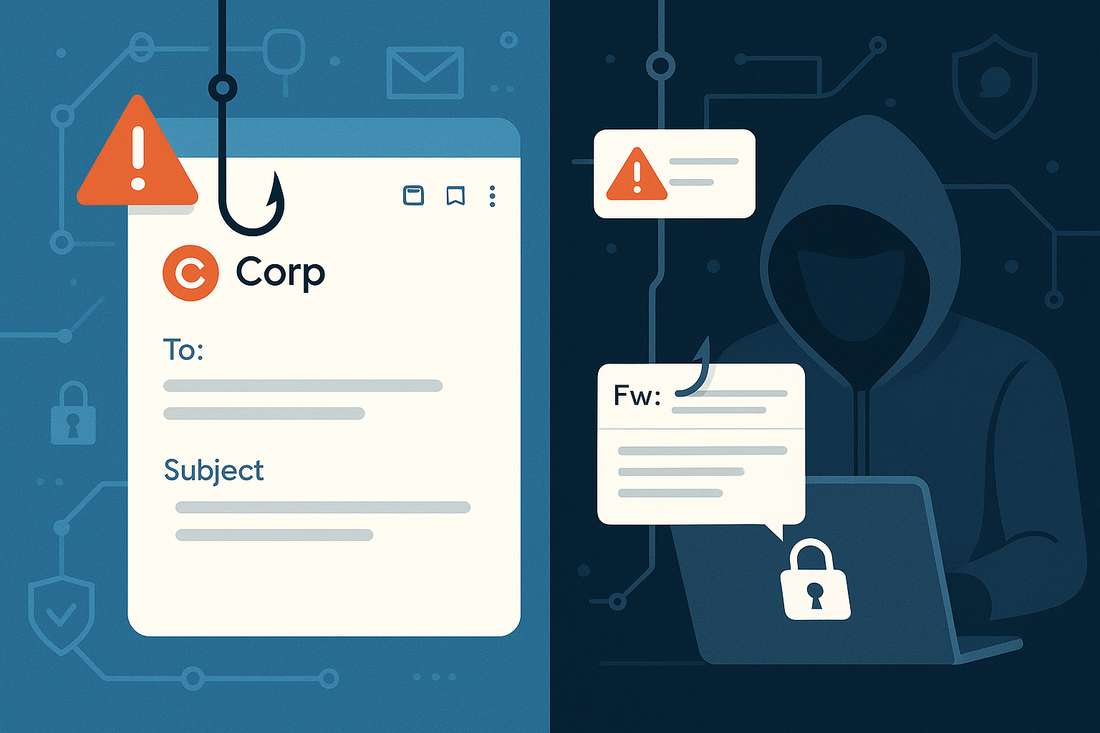
Business E-Mail Compromise (BEC) Attack
Rachel GreenShare
Business E-Mail Compromise (BEC) attacks pose a serious threat to organizations worldwide.
As a leading SSL Certificate provider, Trustico® helps businesses protect their e-mail communications and prevent costly BEC attacks through properly implemented SSL Certificate security.
Understanding BEC Attacks
BEC attacks involve cyber-criminals impersonating legitimate business e-mail accounts to defraud companies and their employees. These sophisticated attacks often target organizations that conduct wire transfers or work with foreign suppliers.
Without proper e-mail security measures like Trustico® SSL Certificates, businesses remain vulnerable to BEC attacks that can result in significant financial losses.
Our SSL Certificate solutions provide the encryption and authentication needed to verify e-mail communications.
The FBI's Internet Crime Complaint Center (IC3) reports that BEC attacks have caused over $43 billion in losses globally since 2016.
These attacks continue to evolve in sophistication, with attackers leveraging social engineering, account compromise, and domain spoofing techniques to bypass traditional security measures.
Common BEC attack vectors include CEO fraud (impersonating executives), account compromise (gaining access to legitimate e-mail accounts), and domain spoofing (creating similar-looking domain names).
Each of these attack methods can be mitigated through proper implementation of Trustico® SSL Certificates and digital signatures.
How SSL Certificates Prevent BEC Attacks
Trustico® SSL Certificates play a crucial role in preventing BEC attacks by enabling secure e-mail communication. Our SSL Certificates provide encryption to protect sensitive data and authentication to verify the identity of e-mail senders.
We offer both Trustico® branded and Sectigo® branded SSL Certificates designed specifically for securing business e-mail systems. These include options for S/MIME E-Mail Certificates that enable digital signatures and end-to-end encryption.
Digital signatures powered by Trustico® E-Mail Certificates create a cryptographic seal that verifies both the sender's identity and message integrity.
When properly implemented, these signatures make it virtually impossible for attackers to forge e-mails from your organization, as recipients can instantly verify whether a message is authentic.
E-Mail encryption using Trustico® E-Mail Certificates ensures that sensitive communication remains confidential even if intercepted.
This prevents attackers from gathering intelligence through e-mail monitoring that could later be used in targeted BEC attacks.
The Technical Foundation of E-Mail Security
S/MIME (Secure/Multipurpose Internet Mail Extensions) provides the technical framework for securing e-mail with Trustico® E-Mail Certificates.
This protocol enables both digital signatures and encryption, creating a comprehensive security solution for business e-mail.
When implementing S/MIME with Trustico® E-Mail Certificates, each user receives a unique E-Mail Certificate containing their public key.
This E-Mail Certificate is used to verify digital signatures and encrypt messages sent to that user. The corresponding Private Key, securely stored on the user's device, is used to create signatures and decrypt received messages.
Trustico® E-Mail Certificates leverage the same trusted Public Key Infrastructure (PKI) that secures websites and other digital assets. This established security framework ensures compatibility across e-mail clients and platforms while providing the highest levels of cryptographic protection.
Essential E-Mail Security Solutions
For comprehensive protection against BEC attacks, Trustico® recommends implementing E-Mail Certificates for signing all business communications.
Our E-Mail Certificates allow recipients to verify sender authenticity and ensure e-mails have not been tampered with.
Organization Validation (OV) and Extended Validation (EV) SSL Certificates from Trustico® provide additional layers of security by validating your business identity.
This helps establish trust and makes it harder for attackers to impersonate your organization.
Domain-based Message Authentication, Reporting, and Conformance (DMARC) works alongside SSL Certificates to prevent domain spoofing.
Trustico® recommends implementing DMARC in conjunction with SSL Certificate-based e-mail security for maximum protection against BEC attacks.
User education remains essential even with technical safeguards in place. It's important that organizations train employees to recognize suspicious e-mails and verify requests through secondary channels before taking action on financial or sensitive matters.
Implementation Best Practices
Proper SSL Certificate implementation is critical for effective BEC attack prevention.
Trustico® provides expert guidance on SSL Certificate deployment, including integration with popular e-mail platforms and services.
Start by identifying key personnel who should receive E-Mail Certificates, prioritizing executives, finance team members, and anyone authorized to request or approve financial transactions. These individuals are the most likely targets for BEC attacks and require the highest levels of e-mail security.
Implement a clear certificate distribution and installation process for all users.
Trustico® provides step-by-step guides for installing E-Mail Certificates on major e-mail clients including Microsoft Outlook, Apple Mail, and Google Workspace.
Establish policies requiring digital signatures on all financial and sensitive communications. This creates a consistent security practice that helps recipients identify unsigned messages as potentially suspicious, even if they appear to come from trusted sources.
E-Mail Client Compatibility
Trustico® E-Mail Certificates are compatible with all major e-mail clients and platforms.
Microsoft Outlook provides native support for S/MIME digital signatures and encryption using our E-Mail Certificates.
Apple Mail users can easily install and use Trustico® E-Mail Certificates for secure e-mail communication.
The integration process is straightforward, and our support team provides detailed guidance for proper configuration.
Google Workspace (formerly G Suite) supports S/MIME encryption with Trustico® E-Mail Certificates through its enhanced security settings. This enables organizations using Gmail for business to implement strong protection against BEC attacks.
Mobile device support is essential for modern business communication. Trustico® E-Mail Certificates can be installed on iOS and Android devices to maintain secure e-mail practices across all platforms used by your organization.
Ongoing Protection and Management
Trustico® helps you maintain strong e-mail security through the Trustico® order tracking system, where you can manage validation, reissues, and downloads and view the validity dates of your Certificates and licenses. License expiry warnings help you renew in time.
Regular security audits and updates ensure your e-mail systems remain protected against new BEC attack variants.
Certificate lifecycle management is critical for maintaining continuous protection. Trustico® provides tools to monitor certificate expiration dates and streamline the renewal process, preventing security gaps that could be exploited by attackers.
Implement a response plan for suspected BEC attempts despite your security measures. This should include clear procedures for verifying unusual requests, reporting suspicious messages, and containing potential compromises if they occur.
Real-World BEC Attack Scenarios
Understanding common BEC attack patterns helps organizations recognize the importance of proper e-mail security.
In typical CEO fraud scenarios, attackers impersonate executives requesting urgent wire transfers. Without E-Mail Certificate digital signatures, recipients have limited ability to verify these requests.
Invoice fraud represents another common BEC attack where criminals send fake invoices from compromised or spoofed vendor e-mail accounts. Trustico® E-Mail Certificates with digital signatures allow recipients to verify whether invoices genuinely come from your trusted vendors.
Data theft often begins with BEC attacks targeting employees with access to sensitive information. Encrypted e-mail communication using Trustico® E-Mail Certificates ensures that even if attackers gain access to e-mail accounts, they cannot read protected messages.
Legal and compliance implications of BEC attacks extend beyond direct financial losses.
Organizations may face regulatory penalties for data breaches resulting from inadequate security measures. Implementing Trustico® SSL Certificates demonstrates due diligence in protecting sensitive communications.
Why Choose Trustico® SSL Certificates
As an industry leader in SSL Certificate solutions, Trustico® provides superior protection against BEC attacks and other e-mail-based threats. Our SSL Certificates offer the highest levels of encryption and authentication available.
With competitive pricing, expert support, and a wide range of SSL Certificate options, Trustico® delivers the e-mail security solutions businesses need. Contact our team today to learn how our SSL Certificates can protect your organization from costly BEC attacks.
Trustico® SSL Certificates are backed by industry-leading warranty protection, providing financial assurance in the unlikely event of SSL Certificate mis-issuance or compromise. This additional layer of protection demonstrates our confidence in the security of our SSL Certificate solutions.
Our dedicated customer support team specializes in e-mail security implementations and can provide personalized guidance for your organization's specific needs. Advice and direction are part of our support, and more in-depth solutions are available upon request, helping you receive the assistance needed to effectively protect against BEC attacks.